
If you are exercising at home rather than at a gym, you are working with less space, no spotter and whatever kit you happen to own. That changes what a sensible session looks like, and it changes what recovery looks like afterwards.
Home workouts are easy to fit around a day, cost nothing, and you can go at your own pace without feeling watched. That last one matters more than people admit: you are not being rushed, and you are not tempted to push past what your body is telling you because someone is waiting for the bench.
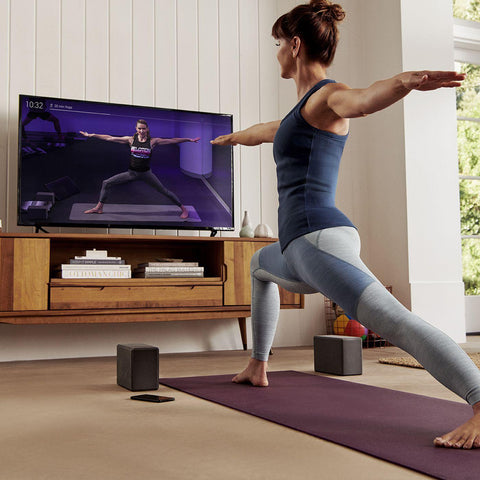
Benefits of Home Workouts
Home workouts save a lot of time. You do not need to travel, or invest in expensive equipment. You can work out at any time of the day with no restrictions, and you do not need to worry about getting anywhere on time.
You can work out privately from home, making the exercise a little more comfortable, and without having to feel self-conscious about anything around others. However, the most important benefit in our opinion here at Essential Wellness is that you work out at your own pace. You do not need to be rushed or to push yourself beyond your limits. You can work out calmly.
What types of Home Workouts are they?
There are many home workouts you can do, some being more intense than others. With that in mind, it is important to find what you’re comfortable with doing. Choose a workout akin to your fitness level, your health and your age.
Here are some links to Home Workouts published by the NHS:
Home Legs, Bum and Tummy Workout (10 Min)
Home Abdominal Workout (10 Min)
Home Upper Thigh and Bum Workout (10 Min)
Home Upper Arms Workout (10 Min)
There is also a warm up and a cool down worth doing either side of a session:
Home Pre-Exercise Warm Up (6 Min)
Home Cool Down Routine (5 Min)
What is the best way to recover from a Home Workout?
Mostly: warm up, cool down, and give the muscle group a day before you hit it again. Nothing prevents or cures an injury, and we are not going to tell you a gadget does. The honest version is that soreness after a session is normal, it settles, and the things that help most are the boring ones.
A massage gun sits alongside that rather than replacing it. Plenty of people find the percussion comfortable on tired legs or shoulders after a workout, in the same way a foam roller or a hot bath is comfortable. Use it on muscle, not on joints, bone or anywhere that is actually injured, and stop if it hurts.
If pain is sharp, is in a joint rather than a muscle, or is still there several days later, that is one to get looked at rather than massage.