
PRICE is the treatment the NHS recommends for the first 2 to 3 days after a sprain: Protection, Rest, Ice, Compression and Elevation. This guide walks through what each of those actually means when you are sitting at home with a swollen ankle, rather than in the abstract.
One thing worth saying plainly up front, because a lot of ankle advice online gets it wrong: nothing here will make your ligaments heal faster. Healing takes the time it takes. What good early treatment does is keep the swelling under control, keep you comfortable, and stop you doing something that sets you back. That is worth doing well, and it is a different claim from speeding up recovery.
Most sprains and strains feel better after about 2 weeks, though the NHS advises avoiding strenuous exercise such as running for up to 8 weeks because of the risk of further damage. Severe sprains can take months to get back to normal. Where you land in that range depends on the injury, not on how well you follow a checklist.
PRICE - Protection, Rest, Icing, Compression and Elevation
When you have gone over on your ankle, the damage to the ligaments is what causes the pain, weakness and swelling. These tough bands of fibrous tissue normally hold the ankle joint together, and when they are frayed or torn the job for the first few days is to protect them from further tearing.
Protection
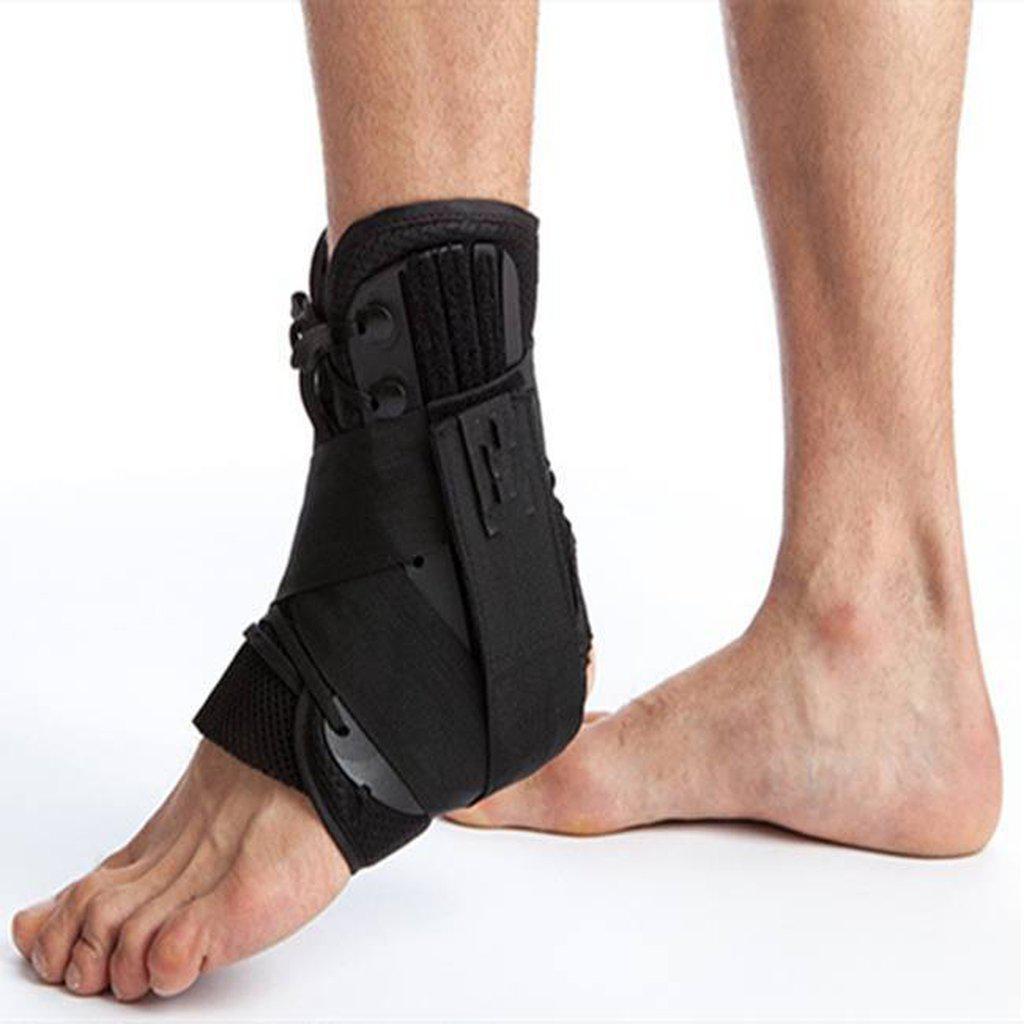
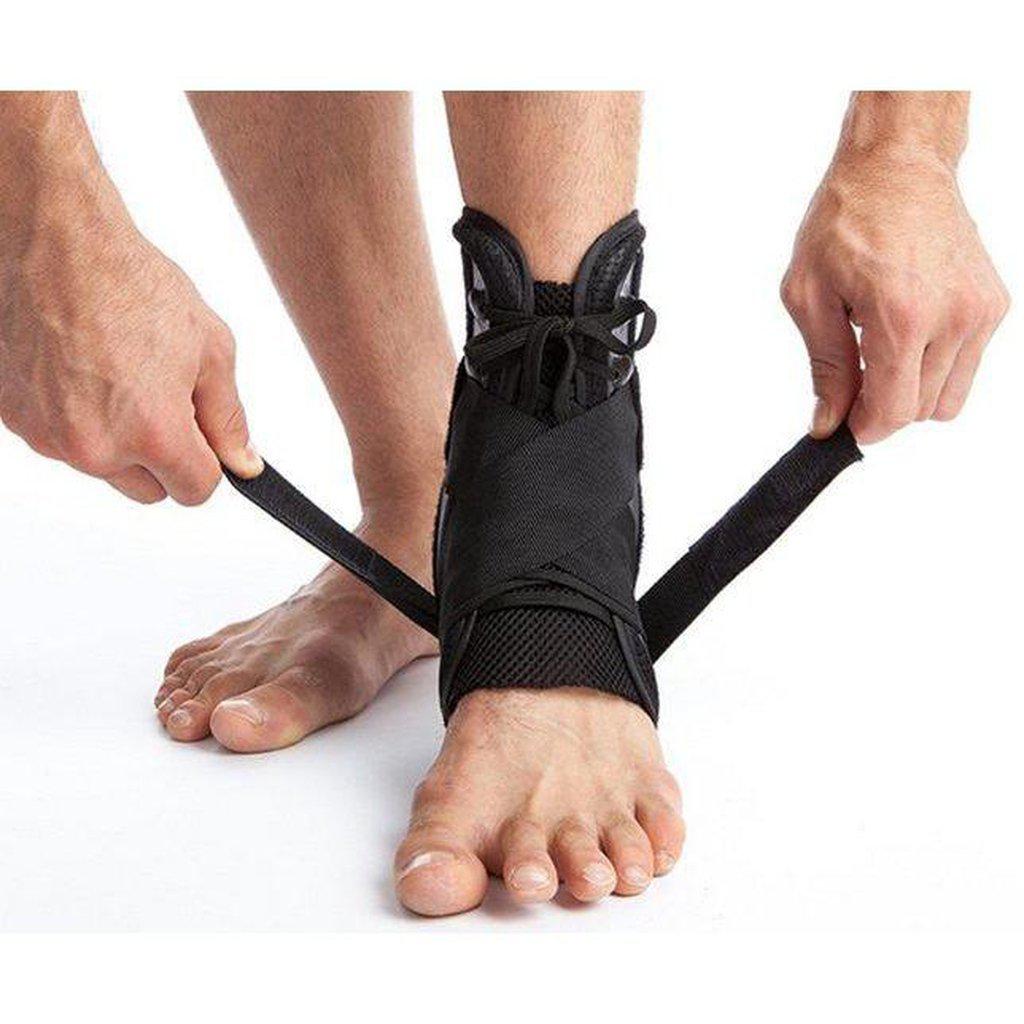
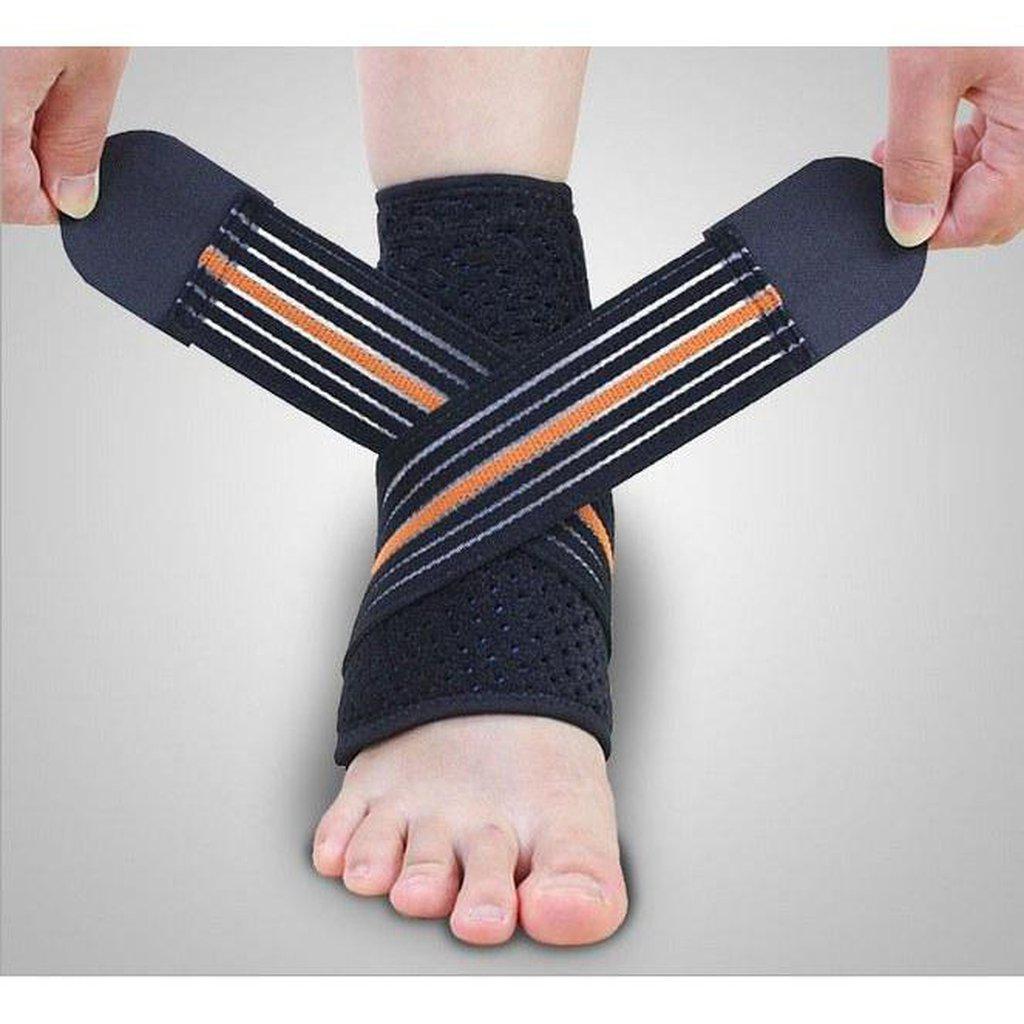
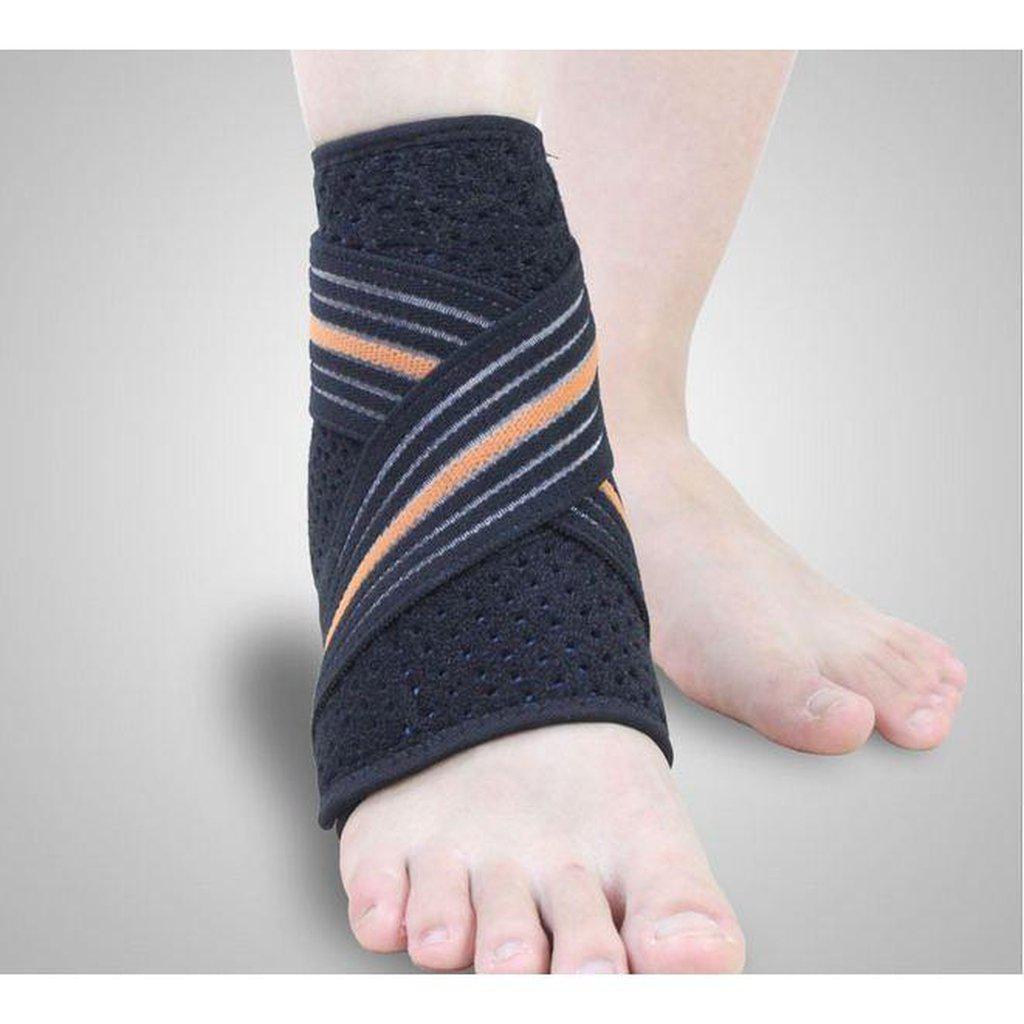
Avoid situations where the ankle can take a knock or a bump, or be asked to do its normal job of taking your weight. A supportive shoe or an ankle support is the usual way to do this. We make an adjustable ankle support for milder sprains and a rigid ankle brace where more protection is wanted, though any supportive footwear is better than none.
- Tell your kids, if you have them, and get them on board with being extra careful around you. Accidental knocks can set you back.
- Do not rest your foot where the dog normally sits on the sofa. Putting your foot in Fido's spot ends exactly how you would expect.
- Wear something with rigid protection if you are moving around a busy house.
Rest
Rest for the first couple of days, and then start moving. That second half matters as much as the first: the NHS is explicit that once you can move the injured area without pain stopping you, you should try to keep moving it so the joint does not become stiff. Resting a sprained ankle for two solid weeks is not a safer choice, it is how you end up with a stiff ankle on top of an injured one.
Even in the first days, gently rotate the ankle now and then and take it through its range of movement without weight on it. That keeps it from stiffening and keeps things moving around the joint.
Resting is not
- Keeping your foot completely stationary for a fortnight.
- Repeatedly testing how much weight it can take in the first days, to see how it is coming along.
- Nipping to the kitchen unsupported because it has been a few days and it does not hurt while you are sitting down. An ankle that is comfortable at rest is not necessarily ready to be walked on.
Resting is
- Asking friends and family for help with the shopping, the kids, the errands.
- Setting yourself up for a long sit: drink and snacks within reach so you are not up and down.
- Getting the groceries delivered rather than hobbling round a supermarket.
- Being kind to yourself about it. Being stuck on the sofa is genuinely miserable, and a fortnight of it wears people down more than they expect.
Icing
You are probably seeing a fair amount of swelling by now. Some swelling is the body doing its job. An ice pack helps keep it in check and numbs the area, which takes the edge off the pain.
Wrap a handful of ice cubes in a tea towel, or use a bag of frozen vegetables, and rest it over the most swollen part. Do not put ice straight onto skin.
- No ice? A packet of frozen veg does the same job.
- Pop the ice in a plastic bag to catch the water as it melts.
- A damp hand towel left in the freezer until almost stiff feels very good on a hot, swollen ankle.
- Apply it periodically through the day rather than leaving it on continuously.
For the first couple of days, the NHS advises avoiding heat (hot baths and heat packs), alcohol and massage, all of which tend to increase swelling.
Compression
Compression helps manage swelling through the day without needing ice constantly. You want a firm, even pressure, not a tight one: if it is leaving deep indents, throbbing, or your toes are going numb or changing colour, it is too tight.
- Early on, a support that opens right out is easier to get a swollen foot into. A reinforcing strap over the top lets you set the pressure.
- Later, a lighter sleeve that pulls on like a sock is usually enough.
Elevation
Use gravity. Getting your foot above hip level lets fluid drain away from the ankle instead of pooling in it. Below hip level and you get much less benefit.
- Rest your foot on the arm of the sofa.
- Pull a chair round in front of you and put your foot on that.
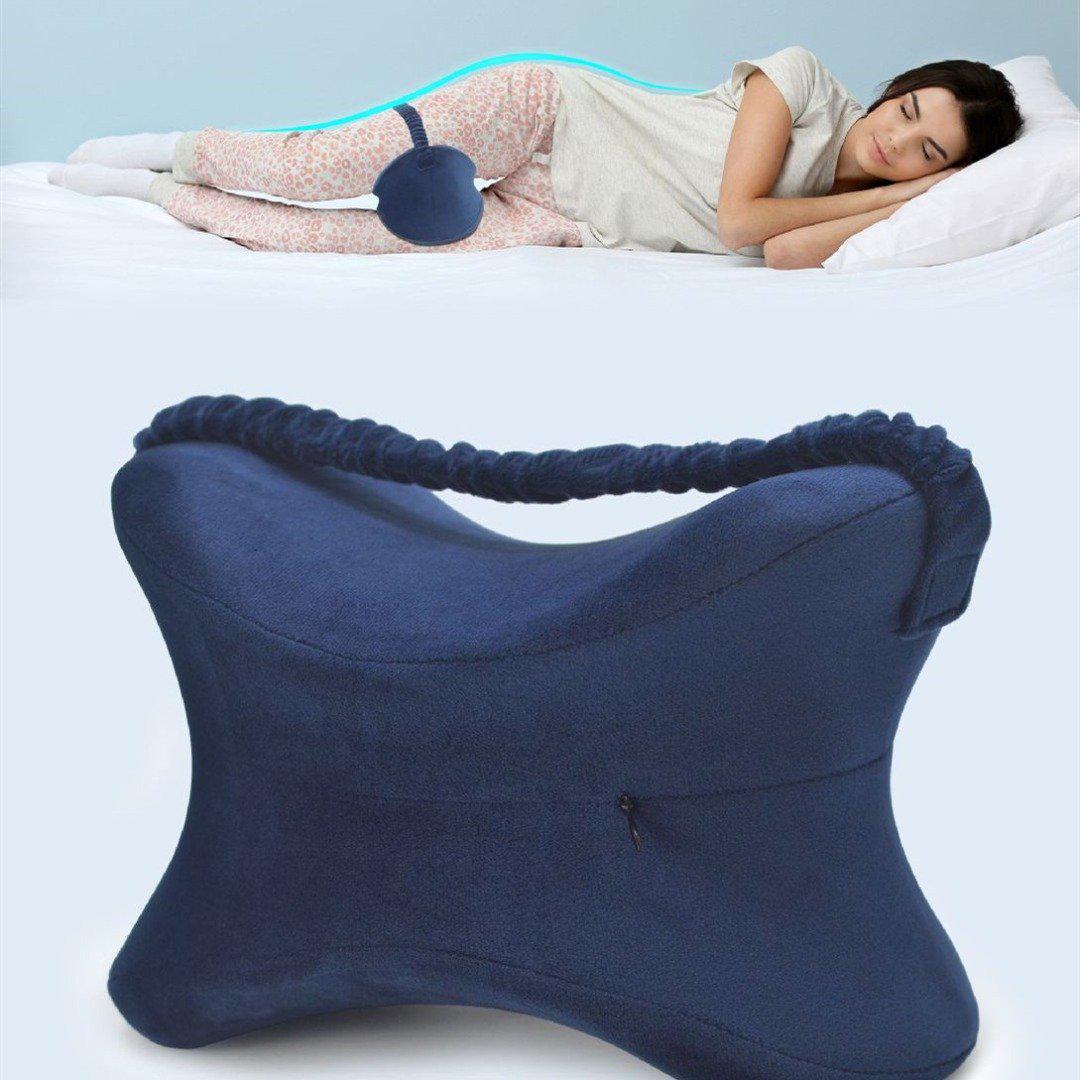
- In bed, a pillow under the foot gives you some elevation overnight.
A pharmacist can help
You do not need an appointment for this. A pharmacist can advise on pain relief for a sprain, which might be paracetamol, or an ibuprofen gel, mousse or spray rubbed onto the skin to bring the swelling down.
When to stop self-treating and get help
Contact NHS 111 if you have had an injury and any of these apply:
- it is very painful, or the pain is getting worse
- there is a large amount of swelling or bruising, or it is getting worse
- you cannot put any weight on it, or walk more than a few steps
- it feels very stiff, or is difficult to move
- it is not feeling any better after treating it yourself
- you also have a very high temperature, or feel hot, cold or shivery
If your ankle keeps giving way underneath you once the initial injury has settled, that is worth taking to a physiotherapist rather than living with.

Further reading
- When it is appropriate to drive after a sprained ankle
- What sort of shoes to wear after a sprained ankle
- How long you can expect to be off work
- Restoring your balance afterwards
General information, not a substitute for advice about your own ankle. Guidance on PRICE, what to avoid in the first days, healing times and when to contact NHS 111 is drawn from the NHS page on sprains and strains.