
Suffering from knee pain?
Knee pain has a lot of causes, and it can affect far more of your life than just your knee. Walking, stairs, standing for any length of time, getting out to see people. It adds up.
A hinged knee brace is one of the things people try. Here is an honest account of what it does and does not do, so you can decide whether it is the right thing for you.
What is a hinged knee brace, and what does it actually do?
A hinged knee brace is an adjustable support with rigid stays and hinges built into each side. Those hinges are designed to limit side-to-side movement while still letting the knee bend and straighten through its natural range.
That is the mechanism, and it is worth being straight about the limits of it. A brace does not treat arthritis, heal an injury or strengthen a knee, and we are not going to tell you it prevents injuries. What it does is control movement and give a firm, held feeling. For a lot of people that is the difference between trusting the knee on uneven ground and not.
If anything, strength comes from the exercises a physiotherapist gives you, not from the brace. The two work best together.
How to put it on
Sit down, bend the knee slightly, and position the brace so the cushioned ring sits around the kneecap rather than on top of it. Fasten the straps from the middle outwards. There is a metal stay on each side, which is what gives it the rigidity.
Set the straps snug, not tight. It should feel supportive and secure. If it pinches, throbs, leaves marks, or your lower leg starts to tingle or go cold, it is too tight. Loosen it.
How long should I wear it?
Most people wear a brace for the parts of the day that need it: being on your feet, walking any distance, a task you know your knee will complain about. Do not assume all-day or overnight wear is right for you. A rigid brace worn constantly is a decision for whoever is treating you, particularly after surgery or a dislocation, and it is worth asking rather than guessing.
It fits under trousers if you would rather not have it on show, or over them if that is easier to adjust.
People commonly reach for the hinged brace when dealing with:
- Knee osteoarthritis
- Tendon pain around the knee
- A kneecap that tracks poorly and feels like it shifts sideways
- Getting back into activity and exercise
- A knee that feels unreliable underfoot
Two things worth saying plainly. If you are recovering from knee surgery or a dislocation, the brace and how you use it should be your treating team's call, not something you decide from an article. And if your knee actually gives way, locks, will not take your weight, or you have had a fall because of it, that needs assessing rather than bracing.
Where can I get one?
We make our own hinged knee brace. It comes in three sizes, and the product page carries the current price and a measuring guide so you can check which size fits before you order.
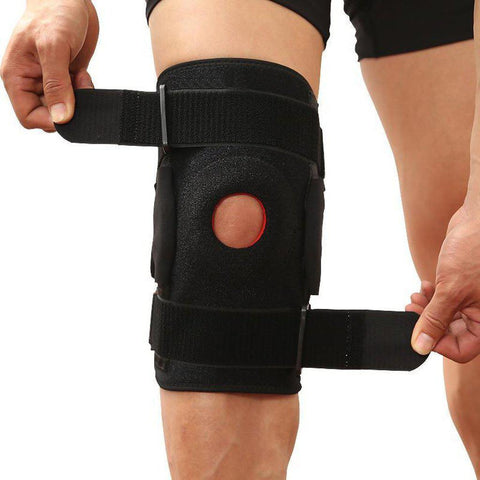
View the Essential Wellness Hinged Knee Brace
Not sure a hinged brace is what you need? Our knee support comparison sets the three types side by side, from a light compression sleeve through to this one.